TL;DR. The EP Cube 1.0 generation installed in Edmonton cost $19,381 (9.9 kWh) to $24,723 (19.9 kWh) all-in — that generation is now sold out, and the EP Cube 2.0 is quoted with one all-in written price at the free assessment — battery, hybrid inverter, Master Electrician install, permit and inspection — and $1,000 less bundled with new solar. Alberta's electrical code caps residential storage at 20 kWh per unit / 40 kWh per home, standard install is the attached garage, and the warranty is 10 years or 6,000 cycles. Expect ~24–48 hours of critical-loads backup depending on size.
As of May 2026 — while EP Cube 1.0 stock lasted — the short answer for Edmonton homeowners was: $19,381 fully installed for the entry 9.9 kWh Canadian Solar EP Cube, scaling to $24,723 for the 19.9 kWh max single-unit configuration. Bundle a battery with a new Stellar Upgrades solar install and you save $1,000 across any size.
That's the headline. The interesting part is everything around it, what battery backup actually does (and doesn't do), what Alberta's electrical code lets you install, and how to size a battery for your specific home rather than just "more is better."
Get a free battery backup assessment →
What battery backup actually does (and what it doesn't)
The most common misconception is that a home battery means unlimited power during an outage. It doesn't. A battery stores a finite amount of energy, measured in kilowatt-hours (kWh). When the grid goes down, the battery powers your home until that stored energy is depleted. How long that lasts depends on two things: how much energy the battery holds, and how hard you're running your home.
That has a real implication: if you size the battery for "whole-home, normal usage" you'll get fewer hours of backup than if you size it for "critical loads only." Both are valid choices, they're just different tradeoffs.
If you have solar, the battery can recharge during daylight, which extends backup time as long as the sun shows up. This is the single biggest advantage of solar plus battery over a generator: no fuel logistics during multi-day winter outages.
Here are the three real use cases, in plain language. No marketing fluff:
- Backup during power outages. The obvious one. Fridge stays cold, furnace blower keeps running, lights and internet stay on.
- Self-consumption optimization. Use your own solar at night instead of pulling from the grid. Increases the share of your own production you actually use.
- Time-shifting solar production. Charge battery during sunny midday hours, discharge during evening peak demand.
One important Alberta-specific note: Alberta does NOT have intraday time-of-use electricity rates that change hourly. Solar Club has seasonal HI/LO rate switching (covered in our rebates guide) but not intraday arbitrage. Alberta battery economics are primarily driven by self-consumption and outage protection, NOT by buying cheap and selling expensive intraday. Anyone selling you an Alberta battery on "rate arbitrage savings" is selling you the wrong story.
EP Cube 1.0 transparent pricing
For the record, here's what Stellar Upgrades charged for the Canadian Solar EP Cube 1.0 — now sold out — fully installed in an Edmonton attached garage with all permits and commissioning included. (EP Cube 2.0 pricing is quoted as one written all-in number at the free assessment.)
| System Size | Configuration | Installed Price | With New Solar Bundle |
|---|---|---|---|
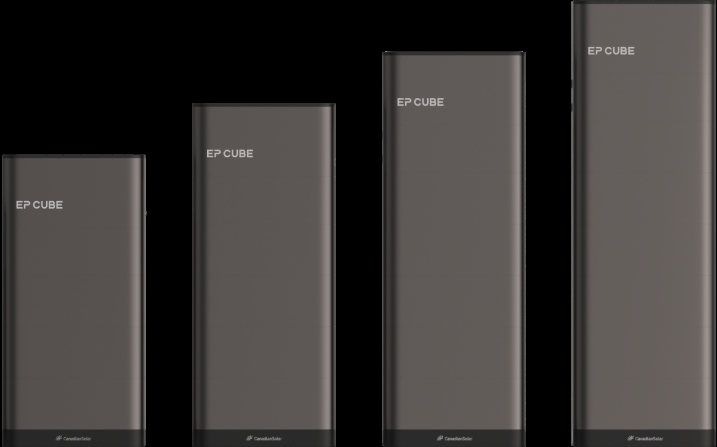
| 9.9 kWh | Base + 3 modules | $19,381 | $18,381 |
| 13.3 kWh | Base + 4 modules | $21,578 | $20,578 |
| 16.6 kWh | Base + 5 modules | $22,942 | $21,942 |
| 19.9 kWh | Base + 6 modules (max single unit) | $24,723 | $23,723 |
| 26.5–39.8 kWh | Two EP Cube units | Consultation required | |
Note: those capacity figures (13.3 / 16.6 / 19.9 kWh) match Canadian Solar's official datasheet. Some online resources cite 13.2 / 16.5 / 19.8 kWh based on simple module-stacking math, but the manufacturer's published numbers are 13.3 / 16.6 / 19.9.
Above 19.9 kWh requires a second complete EP Cube system installed in parallel with the first, with both units spaced minimum 1 metre apart per Alberta electrical code Rule 64-918. Cost roughly doubles because the second unit requires its own base, hybrid inverter, mounting hardware, and balance of system. Maximum residential aggregate per Alberta code: 40 kWh across all ESS units in the dwelling (more on that in the next section).
The $1,000 solar bundle discount applies when battery is purchased together with a new Stellar Upgrades solar installation. The discount reflects shared transportation, consolidated permits, and combined electrical work. Not a promotional gimmick that gets clawed back later.
What's included in the installed price
- EP Cube hardware: battery modules + integrated hybrid inverter + base
- Wall mounting and lift kit
- Standard electrical work for attached garage installation
- Critical-loads panel or whole-home backup configuration (specified at consultation)
- Permits (City of Edmonton or applicable municipality)
- Commissioning, app setup, monitoring activation
- Stellar Upgrades workmanship warranty
- 10-year manufacturer warranty (Canadian Solar)
What requires custom pricing (consultation needed)
- Detached garage installations (additional conduit and trenching)
- Outdoor enclosure installations (insulated cabinet required for Edmonton winters)
- Complex main panel upgrades
- Systems above 19.9 kWh (requires a second EP Cube unit)
- Off-grid or grid-isolated configurations
- Generator integration
Alberta electrical code: what you can legally install
This is where most installer content waves vague hands. The actual rules are concrete and worth understanding before you sign a quote. The references below reflect Alberta residential ESS regulations as of May 2026.
Battery storage in Alberta dwellings is regulated by:
- Canadian Electrical Code Part I, Rule 64-918
- Alberta STANDATA Variance 21-ECV-064-900-ESS (issued by Alberta Municipal Affairs)
- Alberta Building Code (location and ventilation requirements)
- City of Edmonton (or applicable municipality) building permits
Current code limits as of 2026:
- Single ESS unit: maximum 20 kWh storage capacity in any dwelling
- Aggregate ESS: maximum 40 kWh total across all units in the dwelling
- Spacing: multiple ESS units must be installed at least 1 metre apart
- Below grade / basement: permitted via a dedicated battery utility room — 18-in clearance both sides, fire-rated door, fire alarm, exhaust fan
- Living spaces: prohibited (no closets, storage rooms, bathrooms, stairways, bedrooms)
- Garages: explicitly permitted (attached or detached, with proper electrical work)
What this means for EP Cube planning:
- One EP Cube unit at up to 20 kWh: code-compliant.
- Two EP Cube units totaling up to 40 kWh: code-compliant (with proper spacing).
- Storage beyond 40 kWh: exceeds Alberta's residential aggregate cap.
One detail worth flagging: Canadian Solar's marketing literature mentions parallel configurations up to 59.4 kWh. That applies in some markets but exceeds Alberta's 40 kWh residential aggregate cap. Stellar Upgrades configures all residential systems within Alberta code limits.
How to size a home battery for an Edmonton home
Most posts give a vague "depends on your needs" non-answer. Here's the actual math.
An average Edmonton single-family home consumes roughly 900 kWh/month, or about 30 kWh/day on average.
During a power outage, the goal is usually NOT to run the whole home at normal usage. It's to power critical circuits to maintain safety, comfort, and essential function.
Typical critical loads for an Edmonton home:
- Refrigerator: ~3 kWh/day
- Furnace blower fan (gas furnace): ~4 kWh/day in winter
- Lighting (LED, partial home): ~1.5 kWh/day
- Internet, modem, devices: ~1 kWh/day
- Sump pump (intermittent): ~0.5 kWh/day
- Total critical loads baseline: approximately 10 kWh/day
Which means:
- 10 kWh battery ≈ 24 hours of critical loads (one full day of comfortable backup)
- 15 kWh battery ≈ 36 hours (~1.5 days)
- 20 kWh battery ≈ 48 hours (~2 full days)
- 40 kWh battery (two units) ≈ 96 hours (~4 days)
For homes with solar, recharging during daylight effectively extends backup time as long as sun is available. This is the single biggest advantage of battery + solar versus battery alone, and the biggest advantage of either over a generator (no fuel logistics during multi-day outages).
For whole-home backup including HVAC compressor, EV charging, electric range, and full-load appliances, most homes need 20 kWh minimum and many benefit from 25-40 kWh (larger or paired units). This is the wrong cost-benefit tradeoff for most Edmonton homeowners but right for: homes with high reliability requirements, frequent outage areas, work-from-home setups, or homeowners who specifically want zero behavior change during outages.
Critical loads vs whole-home backup
Critical loads backup (most common, recommended for most homes):
- Pre-selected circuits backed up via subpanel
- Lower battery size needed (9.9 to 13.3 kWh sufficient for most homes)
- Lower total cost
- Longer backup duration during outages
- Recommended for most Edmonton single-family homes
Whole-home backup:
- All circuits backed up via service-entrance integration
- Larger battery needed (19.9 kWh single unit minimum, often 2 units)
- Higher total cost
- Shorter backup duration if you run everything
- Best for: homes with solar, homes in frequent outage areas, work-from-home setups, or homeowners who specifically want zero behavior change during outages
EP Cube 1.0 supports both configurations. The choice is determined at consultation based on your panel layout, priorities, and budget.
Cold weather considerations (Edmonton-specific)
EP Cube 1.0 official operating temperature range per Canadian Solar's North American datasheet (V1.0 July 2024, current as of May 2026): -10°C to 50°C (14°F to 122°F). Recommended operating range: 0°C to 30°C.
Edmonton winters routinely hit -30°C and occasionally -40°C, well below the EP Cube's operating range.
Stellar Upgrades' standard installation location is the attached garage. Edmonton attached garages typically stay above -10°C even in extreme cold due to shared-wall heat transfer with the conditioned home. That's the standard install scenario and pricing.
Other install scenarios (require consultation pricing):
- Detached garage: requires insulation and supplemental heat to maintain spec range, quoted case-by-case.
- Outdoor wall mount: not recommended in Edmonton without an insulated enclosure due to temperature swings.
- Indoor utility room: viable when proximity to main panel allows.
- Basement: available with a dedicated battery utility room — 18-in side clearances, fire-rated door, fire alarm, exhaust fan — built and permitted as part of the install.
- Crawlspace or unheated mechanical room: not suitable.
Battery performance considerations even within the spec range:
- Charge and discharge rates may temporarily reduce in cold conditions.
- LiFePO4 chemistry handles cold better than older NMC chemistry, which is why the EP Cube uses it.
- The battery management system protects cells from damage at temperature extremes.
If your home doesn't have a suitable indoor or attached garage location, this should be discussed at consultation before quote. For more on Alberta solar in cold weather generally, see our Alberta winter solar guide.
EP Cube 2.0 is coming
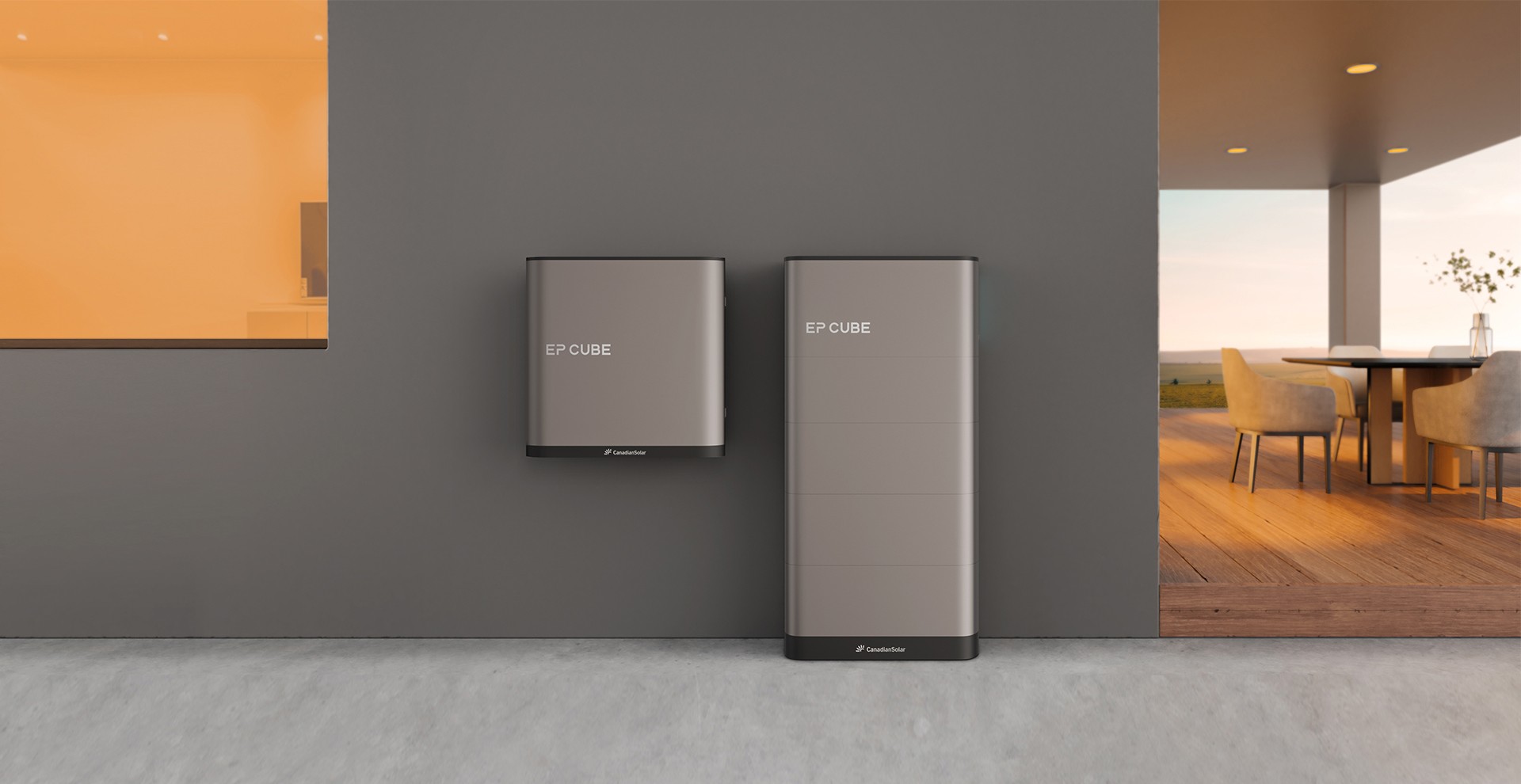
Canadian Solar has announced EP Cube 2.0, which will offer larger single-unit capacity (up to 40 kWh per unit), 11.5 kW continuous output, and an upgraded smart gateway. Stellar Upgrades will offer EP Cube 2.0 when it becomes available in the Canadian market.
For homeowners deciding between installing EP Cube 1.0 today or waiting for EP Cube 2.0: EP Cube 1.0 is available now, fully tested in Alberta conditions, code-compliant under Alberta CEC Rule 64-918, and backed by Canadian Solar's 10-year warranty. EP Cube 2.0 will be a strong option when shipping begins, but the Alberta 40 kWh residential aggregate cap still applies regardless of which generation you install.
Contact Stellar Upgrades for current EP Cube 1.0 availability and EP Cube 2.0 timing updates.
EP Cube vs Tesla Powerwall 3 (honest comparison)
| Feature | EP Cube 1.0 (19.9 kWh) | Tesla Powerwall 3 (13.5 kWh) |
|---|---|---|
| Usable capacity | 19.9 kWh per unit | 13.5 kWh per unit |
| Continuous output | 7.6 kW | 11.5 kW |
| Operating temp | -10°C to 50°C | -20°C to 50°C |
| Chemistry | LiFePO4 (safer, longer cycle life) | LFP (Powerwall 3) |
| Warranty | 10 years / 6,000 cycles to 80% | 10 years / unlimited cycles |
| Modular expansion | Add capacity in 5 kWh steps | Add full Powerwall units |
| Built-in inverter | Yes (hybrid, 4 MPPTs) | Yes (hybrid, 6 MPPTs) |
| Alberta certified | Yes (CSA, cETL) | Yes |
| Stellar Upgrades installs | Yes | No (we're EP Cube specialists) |
Honest take: both are quality LFP batteries with 10-year warranties. Powerwall 3 has higher continuous output (better for whole-home backup of high-power loads). EP Cube 1.0 has higher single-unit capacity (more storage in one box). Stellar Upgrades has chosen EP Cube as our primary battery offering because of its modular flexibility, Canadian Solar's local distribution and warranty support out of Guelph, Ontario, and strong cold-weather performance with proper installation.
Real install examples (anonymized)
Example 1, South Edmonton home with existing 8 kW solar system
- Battery: EP Cube 9.9 kWh
- Configuration: critical loads backup (fridge, furnace, lights, internet)
- Total installed cost: $18,381 (with solar bundle discount)
- Backup duration on critical loads: ~24 hours
- Use case: outage protection + self-consumption of evening solar
Example 2, Sherwood Park new build with 11 kW solar + EV charger
- Battery: EP Cube 19.9 kWh
- Configuration: whole-home backup including EV charger lockout during outages
- Total installed cost: $23,723 (with solar bundle discount)
- Backup duration: ~48 hours of normal use
- Use case: rural area with occasional multi-day outages, EV always charged for emergency travel. (See our EV charger cost guide for the EV install side of this story.)
Example 3, St. Albert acreage with 15 kW solar
- Battery: Two EP Cube units totaling 33.2 kWh (16.6 kWh + 16.6 kWh)
- Configuration: whole-home backup with extended runtime
- Total installed cost: consultation pricing (approximately $42,000-$46,000 depending on electrical work)
- Backup duration: ~80 hours of critical loads or ~3 days normal use
- Use case: rural property where multi-day outages are common, full comfort during extended winter storms
Common mistakes when buying a home battery in Alberta
The biggest cost mistakes Edmonton homeowners make on battery quotes aren't about price, they're about scope and expectations.
Mistake 1: Sizing for normal usage instead of critical loads. A homeowner asks for a battery that can "run the house for 24 hours" without specifying which loads. The installer quoted a 19.9 kWh single unit at $24,723 (1.0-era pricing). The same homeowner would have gotten 24 hours of meaningful backup (fridge, furnace fan, lights, internet) from a 9.9 kWh battery at $19,381, saving $5,342. The conversation that gets to the right answer is "what do you actually need running during an outage?" not "what do you want backed up?"
Mistake 2: Ignoring the Alberta code aggregate cap. A homeowner reads Canadian Solar's marketing about parallel configurations up to 59.4 kWh and assumes that's their option in Alberta. As of May 2026, it isn't. Alberta's residential aggregate cap under CEC Rule 64-918 is 40 kWh per dwelling. Stellar Upgrades configures all residential systems within Alberta code limits regardless of what's advertised in other markets.
Mistake 3: Believing battery payback math built on intraday rate arbitrage. A handful of installers nationally pitch batteries as "make money by buying cheap and selling expensive." That math depends on intraday time-of-use rates that change throughout the day. As of May 2026, Alberta does not have intraday TOU rates. Solar Club has seasonal HI/LO rate switching but not intraday arbitrage. If an Alberta battery quote includes a payback calculation that depends on rate arbitrage, the math is wrong.
Mistake 4: Skipping the install-location conversation. The garage is the standard spot for a reason: temperature-stable, zero extra construction, easy service access. A basement install is absolutely doable — but it needs a dedicated battery utility room (18-inch clearance on both sides, a fire-rated door, a fire alarm, and an exhaust fan), which is real scope that belongs in the quote. A bidder who'll mount the battery in an open basement corner without mentioning any of that hasn't planned a compliant install.
Mistake 5: Overlooking the workmanship warranty. The 10-year manufacturer warranty from Canadian Solar covers the battery hardware. It doesn't cover the install. If the installer's workmanship warranty is shorter than 1 year, or if the install crew isn't on the installer's payroll (subcontractors), the warranty story has gaps. Ask: who is on site doing the work, and how long is the workmanship warranty?
Mistake 6: Treating the EV charger and battery as independent decisions. If you're already adding a Level 2 EV charger, the conduit run, panel work, and permit processing overlap meaningfully with battery install. Bundled installs cut total cost on both pieces. We cover the EV charger side in detail in our EV charger cost guide; the short version is that bundling cuts thousands off compared to separate installs.
Alberta rebates for home batteries (honest reality)
As of May 2026, the Alberta home-battery rebate landscape is straightforward.
Direct residential battery rebates: none currently available in Alberta. The federal Greener Homes Grant closed in 2024 according to Natural Resources Canada. The federal Canada Greener Homes Loan ended October 1, 2025. There is no provincial Alberta rebate specific to residential battery storage.
CEIP (Clean Energy Improvement Program): Several Alberta municipalities allow CEIP financing to cover battery storage when bundled with a solar installation. Currently active CEIP programs:
- Beaumont
- Spruce Grove (reopened April 14, 2026 at 3.5% interest plus 7.5% tax rebate)
- St. Albert ($1,400 incentive on completion)
- Edmonton (bundling required, 6%)
Sherwood Park (Strathcona County) has a participating-waitlist status. Leduc CEIP is paused. CEIP is property-tax-attached financing, it stays with the property if sold and is paid via property tax bills over the loan term.
Solar Club integration: Battery storage doesn't directly qualify for any Solar Club rebate. However, Solar Club members with batteries can capture more value from their HI rate (35¢/kWh as of 2026) by self-consuming stored solar energy at night, effectively avoiding grid imports. See our Alberta solar incentives guide for full Solar Club details, our net metering guide for how export credits and self-consumption interact, and our Alberta solar payback math for how adding a battery typically extends payback by 3–6 years versus solar alone.
Ready for a battery backup assessment?
Free 30-minute assessment. We check your panel, talk through your critical-loads priorities, confirm a compliant install location, and give you a fixed installed price the same day. No estimates that change later. We install EP Cube 2.0 and Tesla Powerwall 3 batteries across Edmonton, Sherwood Park, Spruce Grove, Stony Plain, Leduc, Beaumont, Fort Saskatchewan, Red Deer, and every other community within ~200 km of Edmonton in every direction.
Get a free battery backup assessment → · Read our solar pricing guide →
Sources. EP Cube (Canadian Solar) technical documentation — capacities, LFP chemistry, 10-yr/6,000-cycle warranty; Canadian Electrical Code, 2024 edition, Section 64 residential energy-storage rules (20 kWh per unit), preceded by Alberta STANDATA variance 21-ECV-064-900-ESS; City of Edmonton electrical permits; posted pricing is Stellar Upgrades all-in installed pricing, Edmonton.