An Edmonton homeowner showed us three solar quotes last week. Same 9.6 kW system, same south-facing 2-storey roof in Beverly Heights. The numbers came back $18,400, $24,900, and $33,750. All three companies described themselves as “Alberta’s leading installer.” All three brochures looked the same. Which one was right?
None of them, exactly, but the answer is recoverable, and the path to it is mechanical. Not magical. This guide is the conversation we have with that homeowner. Eleven questions, asked in order, will surface the differences between a real Alberta solar contractor and a sales operation that is going to disappear before your panels see a second winter. The questions are not clever. They are specific. The answers either resolve to verifiable facts or they don’t.
Why this matters more in Alberta right now
Three things changed the Alberta solar market between 2023 and 2026, and they all push in the same direction: more weak operators selling, fewer real installers visible, and confusion in the buyer’s inbox.
The federal program shake-out. Ottawa's Greener Homes Grant wound down in 2024; the companion interest-free federal loan followed on October 1, 2025. Operators that built their entire pipeline on those rebates either pivoted to private-pay sales or disappeared. The companies still here in 2026 generally have a real reason to exist beyond a federal cheque.
The door-knocker boom of 2023–2025. A wave of out-of-province sales operations canvassed Alberta neighborhoods. Contracts were written by canvassers, leads were sold to whichever installer had bandwidth, and warranties were one or two transfer steps removed from the actual roof crew. Plenty of those systems work fine. Plenty of those companies are now unreachable.
The trade most buyers assume is licensed does not exist on paper. Unlike plumbers or electricians, “solar installer” is not a regulated occupation in Alberta. What is regulated is electrical work. Every solar installation requires an electrical permit, and every electrical permit lists a Master Electrician of record: a real person with a verifiable certification through Alberta’s apprenticeship system. That single name on that single document is the legal accountability for your installation, regardless of how many logos appeared on the brochure. More on the current Alberta rebate landscape here.
Franchise model collapses have orphaned warranties. Several national franchise solar brands operating in Alberta have closed locations between 2023 and 2026. Customers are left with manufacturer warranties on the equipment (those survive) and a dead-end phone number for any workmanship claim. This is not theoretical, it is why question 7 in this post is in writing, on paper, before you sign anything.
TL;DR: The 11 questions
Print this and bring it to every solar consultation. If a salesperson refuses to answer any of these in writing, that is the answer to the bigger question.
- Is the company that quotes me the same company doing the installation?
- Who is the Master Electrician of record on my electrical permit, and can I see their certification?
- Do you subcontract any part of the installation to other crews?
- How many residential solar installations has your team personally completed in Alberta?
- Exactly which panels, inverters, and racking will you install, and why these specific products?
- Are microinverters or string inverters better for my specific roof, and why?
- What is your written warranty on labor, workmanship, and equipment, and who honors it if your company closes?
- Will you handle all permits and the EPCOR / FortisAlberta / ATCO / EQUS interconnection paperwork directly?
- Can I see real production data from a system you have installed in my city?
- What is your written policy if my system underproduces compared to your estimate?
- Can I speak to three customers from the past six months in my area?
What this post covers
- Why this matters more in Alberta right now
- Question 1, Same company quoting and installing?
- Question 2, Master Electrician of record
- Question 3, Subcontracting
- Question 4, Real Alberta install count
- Question 5, Specific panels, inverters, racking
- Question 6, Microinverters or string for your roof
- Question 7, Written warranty terms
- Question 8, Permits and utility interconnection
- Question 9, Real production data
- Question 10, Underproduction policy
- Question 11, Three local recent references
- Red flags that should end the conversation
- What a fair Alberta solar quote actually looks like
- Frequently asked questions
Question 1: Is the company that quotes me the same company doing the installation?
This is the single most predictive question on the list. If the answer is no, almost every other answer in this post will degrade. Split the seller from the installer and responsibility starts leaking at every seam: who returns the warranty call, who fixes the permit deficiency, who shows up after a failed inspection, who owns the callback, who controls the panel-level monitoring login.
The pattern shows up in three forms in Alberta: the door-knocker model (a third-party canvassing firm sells the contract, then dispatches to whichever installer has open capacity), the franchise reseller model (a regional operator sells under a national brand and ships installs to a parent or sister entity), and out-of-province quote-and-dispatch operations (sales centralized in another province, install crews flown or driven into Alberta). All three share the same fingerprint: the contract you sign and the team on your roof are not the same legal entity.
Ask for the legal entity name on the eventual electrical permit and the legal entity name on your contract. They should match. If they don’t, you have not asked the question wrong, you have surfaced the answer.
Question 2: Who is the Master Electrician of record on my electrical permit, and can I see their certification?
Alberta does not licence solar installers, but it does license electricians. Every solar installation requires an electrical permit, and every electrical permit lists a Master Electrician of record: the regulated trade professional who is legally responsible for code compliance, supervision, and the inspection result. That person should have a name, a certification number, and a face you have met or will meet on your project.
If a salesperson cannot tell you the name of the Master Electrician who will be on your permit, the company has one of three problems: they have not assigned one yet, they are operating under someone else’s licence, or they plan to find an electrical subcontractor after you sign. None of those are positions you want to be in.
Question 3: Do you subcontract any part of the installation to other crews?
Subcontracting is not automatically wrong, specialty work like crane lifts on commercial roofs or unusual structural reinforcement legitimately gets contracted out. But for a standard residential rooftop solar install in Alberta, the legitimate scope of subcontracting is narrow. Roof prep, racking, panel mounting, electrical, and commissioning should all be the same crew, on the company’s payroll. Not contracted out by job.
The reason is mechanical: a contracted crew has no incentive to come back if a flashing leaks two winters later, and no incentive to do anything beyond the bare minimum the work order specifies. A staff crew working under the same Master Electrician who designed the system carries the consequences of cutting corners. Those incentives produce different roofs. (Roof attachment is its own vetting topic — the mount hardware, flashing method, and 7 roof-specific questions are covered in Will Solar Panels Damage My Roof?)
Question 4: How many residential solar installations has your team personally completed in Alberta?
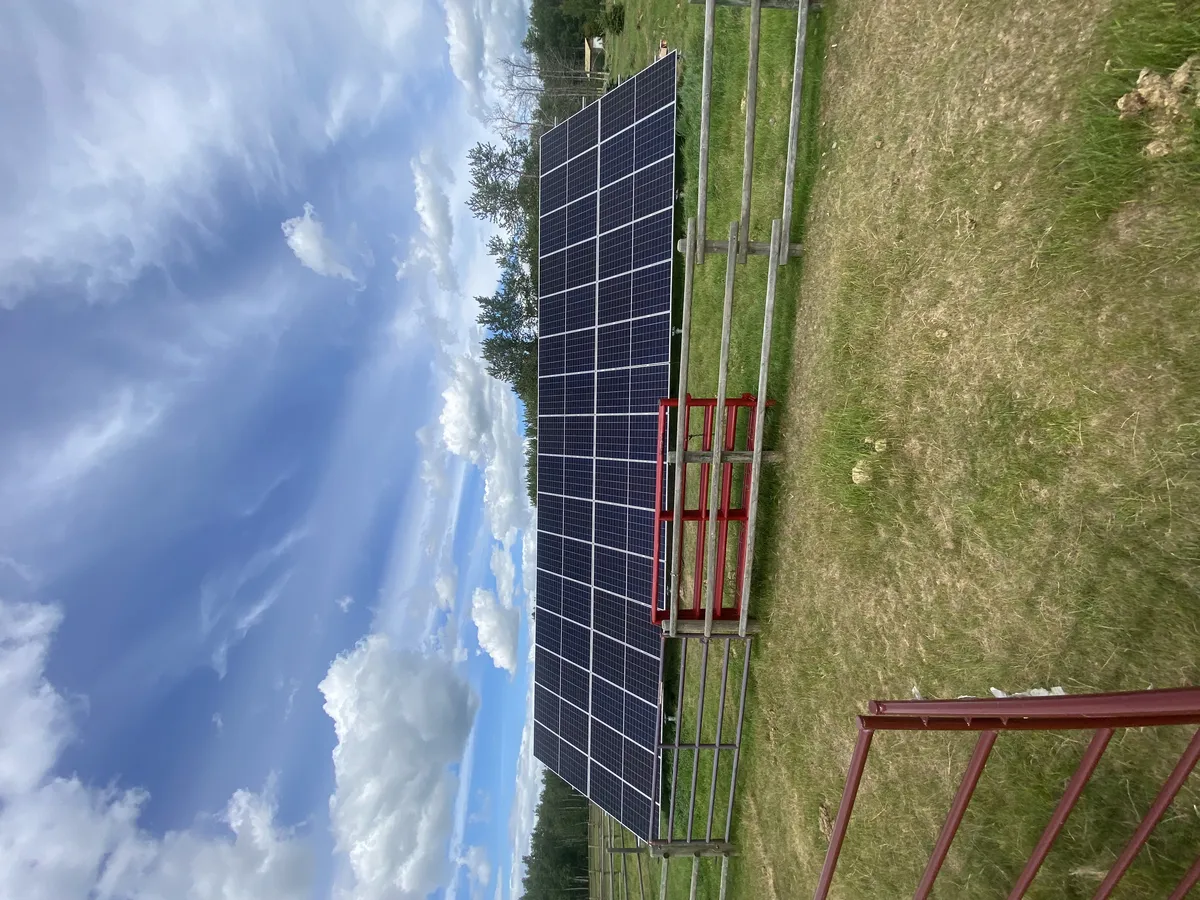
Be specific in how you ask. Not the parent company globally. Not lifetime industry experience. Not the sales rep’s number, how many residential installs has the actual install team in Alberta finished. The number that matters is the same crew, in this province, on residential roofs, with a permit pulled and an inspection passed.
For context: a real Alberta residential solar contractor with a few years of operating history will typically have completed somewhere between 100 and 1,000 installs. Companies under 50 have not yet seen enough roofs to have learned the local-specific failure modes (Alberta hail patterns, attached-garage cable runs in -30°C, EPCOR’s preferred bi-directional meter handoff). Companies claiming numbers in the tens of thousands are almost always quoting franchise or sales-network totals. Not the actual crew that will arrive at your house.
Question 5: Exactly which panels, inverters, and racking will you install, and why these specific products?
The quote should name the panel model and wattage, the inverter make and model, and the racking system. Vague spec sheets that say “Tier 1 panels” or “industry-leading inverter” are a problem, that’s the language used to swap to whatever’s cheapest in inventory the week of install.
You should be able to look up every component on the manufacturer’s website and read the datasheet yourself. The installer should be able to explain why those specific products were chosen for your specific roof. Not just “we always install these.” A real answer connects panel wattage to roof area, microinverter selection to shading or roof complexity, and racking choice to your roof material (asphalt shingle, metal, tile each have different rail systems).
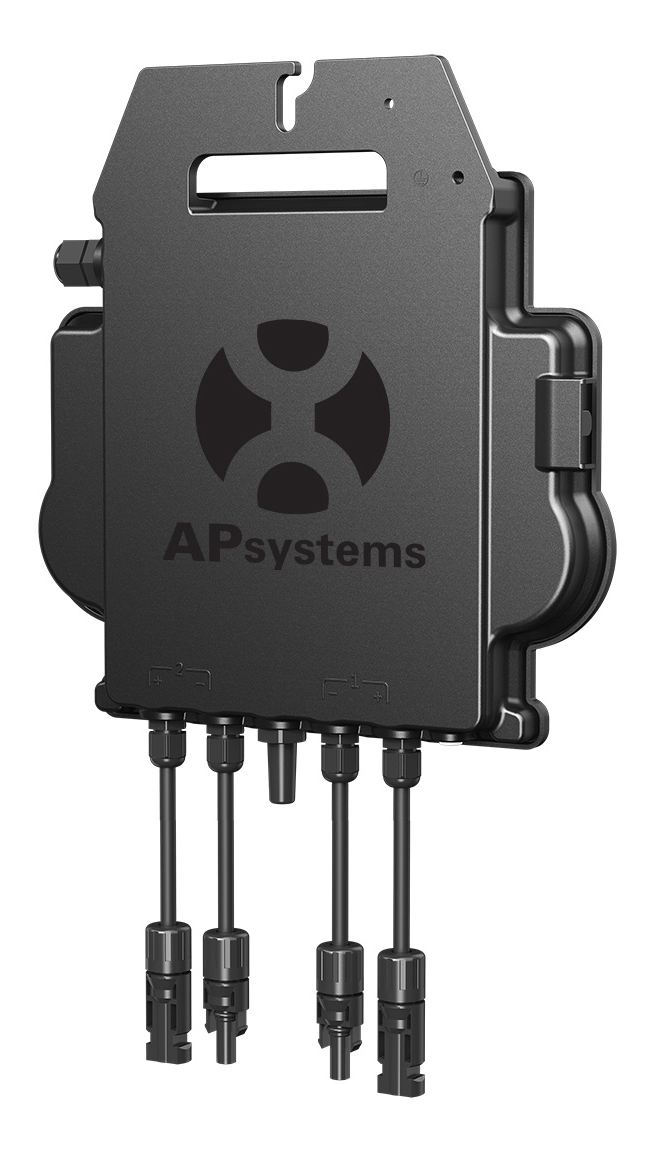
For deeper context on the inverter choice, see our microinverters vs string inverters Alberta guide. For pricing context on what those components should add up to installed, see our Alberta solar panel cost guide.
Question 6: Are microinverters or string inverters better for my specific roof, and why?
The right answer depends on your roof, and that fact is the answer. If your installer recommends the same inverter type for every roof regardless of orientation, shading, and complexity, they are fitting you to their inventory rather than the other way around.
Microinverters (one inverter per panel) win on roofs with multiple orientations, partial shading, complex layouts, or when panel-level monitoring is desired. String inverters (one or two inverters for the whole array) win on simple, unshaded, single-orientation roofs and on commercial-scale installations where the cost-per-watt advantage compounds. The technical reasoning is covered in our Alberta inverter comparison post; the diagnostic value here is just whether your installer asks before recommending.
Question 7: What is your written warranty on labor, workmanship, and equipment, and who honors it if your company closes?
The three warranties are not the same and should be itemized separately on paper. Equipment warranties (panels typically 25 years, microinverters typically 25 years, racking typically 10–25 years) come from the manufacturer and survive the installer’s closure. Workmanship warranties (the installer’s promise that the install was done to code and won’t leak) come from the installer and die with the company unless explicitly assumable. Labor warranties (the installer’s promise to pay for the labor of any equipment swap-out) almost always die with the company.
The right contract states each warranty term in writing, names the entity responsible, and addresses what happens if that entity dissolves. A real installer in 2026 has confronted enough franchise collapses to have language for this. A reseller or resold-warranty operation will usually go vague.
For Stellar’s itemized warranty terms, see our warranty page.
Have a quote already? Get a second opinion.
Paste an existing solar quote (or just the system size and price) and we’ll tell you straight whether it’s in the fair Alberta range, what to ask the original installer, and where the gaps usually are. Free. No obligation. No upsell.
No spam. We respond within 24 hours during business days.
✓ We’re on it.
We’ll review your quote and call within 24 hours.
Question 8: Will you handle all permits and the EPCOR / FortisAlberta / ATCO / EQUS interconnection paperwork directly?
Solar installation in Alberta involves three permitting and approval streams: the municipal electrical permit (City of Edmonton or your local jurisdiction), the structural permit (sometimes required, sometimes rolled into the electrical), and the utility interconnection application through your local distribution wires owner, EPCOR in Edmonton, FortisAlberta in much of central and southern Alberta, ATCO Electric in northern and east-central Alberta, or EQUS (member-owned) in parts of central Alberta. The Alberta Micro-Generation Regulation governs how exported power is credited, covered in our Alberta net metering guide.
A real installer pulls all of these on your behalf, files the Micro-Generation application, schedules the bi-directional meter swap, and walks the inspector through final commissioning. None of it should land on your kitchen table. Operations that hand you a stack of forms and tell you to file with EPCOR yourself are either operating without an electrical contracting business licence or off-loading liability.
Question 9: Can I see real production data from a system you have installed in my city?
Generic production estimates from PVWatts or HelioScope are useful design tools but they are not proof. A real Alberta installer can show you the live or historical production curve from a system in your city, ideally with a similar roof orientation and tilt, pulled from the actual monitoring app. Edmonton production looks different from Calgary, which looks different from Lethbridge, and roof angles change everything inside each city.
Inverter monitoring platforms (the APsystems EMA app, Enphase Enlighten, SolarEdge mySolarEdge) are how you verify. A 60-second screen-share of a real customer’s January-to-December production curve from a roof six blocks from yours is more diagnostic than any sales presentation. For broader Alberta winter production context, see our Alberta winter solar performance post.
Question 10: What is your written policy if my system underproduces compared to your estimate?
Production estimates are always best-effort, weather varies, snow events vary, your tree grows. But a real installer’s written underproduction policy distinguishes between weather-driven shortfalls (your problem) and design-or-installation-driven shortfalls (their problem). The policy should specify what triggers a remediation, who pays for the diagnostic visit, and what the remedy is (panel relocation, additional panels, partial refund).
The point isn’t that you expect to invoke the policy, properly designed Alberta systems hit their estimates. The point is that an installer willing to put a remediation policy on paper is an installer who has seen enough installs to know how the conversation usually goes when something is off, and is confident enough in their own design and workmanship to stand behind it.
Question 11: Can I speak to three customers from the past six months in my area?
This is the verification step the previous ten questions all converge on. Three Alberta customers, in your specific city or municipality, installed within the past six months, with permission to be called. Recent matters because workmanship issues surface in the first winter. Local matters because Alberta climate exposes flashing or racking decisions that don’t fail in milder provinces. Plural matters because any company can find one happy customer.
When you call those references, ask three things: did the company that quoted you do the install, did anything go wrong (and how was it handled), and would they sign with the same installer if they did it again. The signal is in the texture. Not in star ratings.
Red flags that should end the conversation
Some answers are not red flags, they are conversation-enders. Any one of these on its own is sufficient reason to walk away from a quote in Alberta in 2026.
- No municipal electrical permit pulled or planned. Solar installations require a permit. No permit. No inspection. No insurance coverage if something goes wrong.
- Cash-only or wire-transfer-only payment terms. Real Alberta installers accept normal payment methods including financing through reputable third parties.
- Pressure to sign at the door, today, this hour. Alberta’s Consumer Protection Act provides a 10-day cancellation window on door-to-door contracts, but the better answer is not to sign at all without time to verify.
- No specific Master Electrician named. The legal accountability for your installation runs through one regulated trade professional. If they don’t exist on paper yet, you are not yet ready to sign.
- Vague equipment specs. “Tier 1 panels” or “industry-leading inverter” without manufacturer name and model number means whatever’s cheapest at install time.
- Refusal to provide written warranty terms broken out by labor / workmanship / equipment. A single “10-year warranty” line is not a warranty term.
- Sales script that disparages other Alberta installers by name. Real local installers know each other professionally and don’t hard-sell against competitors, the work speaks. Hard-selling against named competitors is usually a sales-network reflex.
What a fair Alberta solar quote actually looks like
Real installed pricing in Alberta in 2026 starts around $2.80 per watt for quality residential systems, scaling down slightly on larger systems where fixed costs (permit, mobilization, electrical balance-of-system) get amortized over more capacity. A 9 kW residential system at that floor lands roughly at $25,200 installed before any rebate or financing, with the actual price depending on roof complexity, panel and inverter selection, racking type, and electrical service work. Detailed cost breakdown in our Alberta solar pricing guide; if you might move before the system pays off, the financed 10 kW + Wallbox example in our Alberta payback period guide shows how a $0-down deal turns cash-flow positive from year one and transfers cleanly with the property at sale.
Quotes substantially below $2.80 per watt almost always pull from one of three places: lower-tier panels with shorter or weaker warranties, undersized racking or insufficient flashing detail, or labour cost suppressed by subcontracting and reduced workmanship coverage. Quotes substantially above the band, particularly from out-of-province operations or franchise resellers, usually carry sales-channel markup, multi-layer warranty wraps, or padded financing fees that disappear if you compare cash-installed price.
An itemized fair quote should break out:
- Panels: make, model, wattage, count, total DC kW, manufacturer warranty
- Inverter(s): microinverters or string, make, model, count, manufacturer warranty
- Racking: rail system make and model, attachment type, flashing detail, manufacturer warranty
- Labour: install crew, electrical scope, commissioning
- Permit and inspection: municipal electrical permit, utility interconnection application
- Monitoring: app and account setup
- Workmanship warranty: stated years, on company letterhead
- Final installed price (cash) before any rebate, before any financing
If a quote is missing any of these line items, ask why. The answer is usually informative.
About Stellar Upgrades

Stellar Upgrades: Edmonton, Alberta
550+ residential solar installations completed since 2018. In-house install team on payroll. No subcontracting on residential work. Master Electrician of record on every electrical permit. Stellar Upgrades is based at Unit 10, 6005 103A St NW, Edmonton. Fully insured, WCB covered, BBB A+ rated.
Every checklist in this post comes from real assessments where a homeowner spread competing bids across the table and asked us to referee them. Because we carry multiple panel and inverter brands, the equipment we recommend is driven by your roof's geometry and shading, never by warehouse inventory. More on the team here.
Sources. Alberta prepaid contracting licence (PCBL) requirements; Solar Alberta installer code of conduct; Alberta Safety Codes Council (Master Electrician of record, permit requirements); public 2024–2025 US solar bankruptcy record (SunPower, ADT Solar, Titan); quote-spread and subcontracting patterns observed across Stellar Upgrades assessments since 2018.