TL;DR. A home battery absolutely works through an Alberta winter — if it's installed where an Alberta winter can't reach it. The EP Cube 2.0's cells are rated to −10°C, so the design puts the cabinet in your attached garage (which stays warmer than that even at −30°C outside) while its −40°C-rated Smart Gateway faces the weather. Done that way, the winter math is boring in the best sense: furnace blower, fridge, lights, internet and sump for ~36 hours at 15 kWh, ~48 at 20 kWh, ~96 at the 40 kWh maximum — refilling from solar every daylight hour.
Every November the same question starts showing up in my inbox, worded a dozen ways: “This all sounds great in July. What happens in February?” It's the right question. Alberta is one of the harshest places on the continent to promise anyone reliable equipment, and a battery is the one piece of a home energy system people intuitively associate with cold-weather failure — everyone has watched a phone die in a ski-hill parking lot.
So here's the complete answer, the same one we give at kitchen tables: what the spec sheet actually says, why the install location — not the chemistry — is the real winter design decision, what the runtime math looks like when it's −30°C and the furnace is the load that matters, and the situations where we'll tell you a battery isn't ready for your home yet.
Get a free winter-readiness battery assessment →
Start with the spec sheet — then read past it
The number that stops people is right on the datasheet: the EP Cube 2.0's published operating range is −10°C to 50°C. Edmonton blows past −10°C for weeks every winter and touches −40°C in a bad cold snap. If the story ended there, a home battery in Alberta would be a seasonal appliance.
But that number describes the battery cabinet, not the system — and no competent Alberta install asks the cabinet to live outdoors. The system splits into two parts with two very different jobs:
- The battery cabinet (the part with the cells) lives in your attached garage, inside the home's thermal envelope. It carries a NEMA 4X enclosure rating — waterproof and dustproof — but temperature, not weather, decides where it goes.
- The Smart Gateway (the part that watches the grid and performs the switchover) is separately rated to −40°C, because it's the component that may face real Alberta air.
That division of labour is the whole winter design. The fragile part stays warm; the tough part stands watch.
The attached garage: the most boring, most important decision
Attached garages are quietly remarkable thermal spaces. They share at least one full wall (often two, plus the ceiling under a bonus room) with a house held at 21°C all winter, and that shared-wall heat transfer typically keeps them above −10°C even when it's −30°C on the driveway — no space heater, no insulation project, no running cost. That's warm enough to keep the EP Cube inside its published operating range through exactly the weeks you bought it for.
The garage isn't the only home for it, though. A basement install is fully available — it just needs its own dedicated battery utility room, which we build and permit as part of the job: 18 inches of clearance on both sides of the battery, a fire-rated door, a fire alarm in the room, and an exhaust fan. That's the warmest location in the house, in exchange for a small construction scope. Most homes pick the garage wall for simplicity, and the code's sizing rules (CEC Rule 64-918: 20 kWh per unit, 40 kWh per home) apply either way.
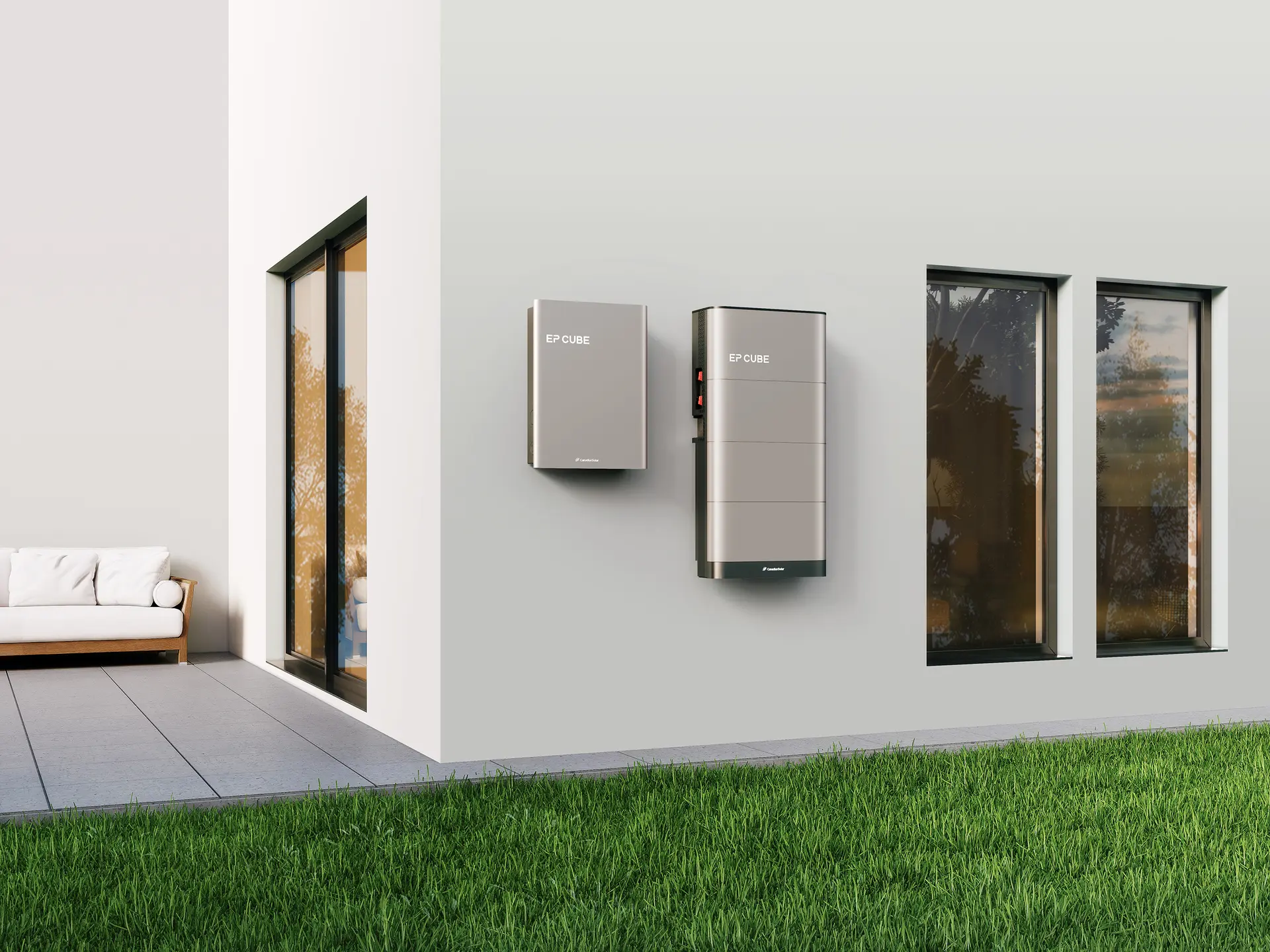
What about homes without an attached garage? This is where you learn a lot about an installer. An unheated detached garage can absolutely drop below −10°C in an Edmonton winter, so we assess those case-by-case at the free site visit — some detached spaces work, many don't. And if a home genuinely has no suitable location, we say so before quoting. A battery installed somewhere it can't perform is the kind of shortcut that shows up on cheap quotes and nowhere else.
Not sure where yours would go?
The free assessment includes a code-compliant location check — attached garage, detached, or an honest “not yet” — before any quote.
What cold actually does to lithium (and why this battery handles it better)
Cold slows the electrochemistry inside any lithium battery: usable output drops, and charging below freezing can damage cells outright. Two things stand between an EP Cube and that fate.
First, the chemistry. The EP Cube uses LiFePO4 (lithium iron phosphate) — the most thermally stable of the mainstream lithium chemistries, with better cold tolerance than the older NMC chemistry used in many earlier home batteries and EVs. Second, the battery management system: it monitors cell temperature continuously and protects the pack at the extremes rather than letting you drain or charge a too-cold battery.
But I'll repeat the line we use in every consult, because it's the honest one: chemistry is not a substitute for a sensible location. LiFePO4 buys you margin. The attached garage is what keeps you inside the spec, all winter, without thinking about it.
The math an Alberta winter actually runs on
Winter is when backup stops being abstract. A summer outage is warm food and a dark evening; a winter outage is a frozen-pipes-and-no-heat problem, and the clock starts the moment the furnace stops. Here's the load math we design around, for a typical Edmonton home running essentials only:
| Critical load | Approx. daily energy (winter) |
|---|---|
| Furnace blower & controls | ~4 kWh/day |
| Refrigerator | ~3 kWh/day |
| Lighting (LED, partial home) | ~1.5 kWh/day |
| Internet, modem, devices | ~1 kWh/day |
| Sump pump (intermittent) | ~0.5 kWh/day |
| Total essential baseline | ~10 kWh/day |
Against the sizes we install, that baseline turns into runtimes you can plan a family around:
| Battery size | Critical-loads runtime | What that covers |
|---|---|---|
| EP Cube 2.0 — 15 kWh | ~36 hours | Any rotating outage Alberta has actually run, with a full day to spare |
| EP Cube 2.0 — 20 kWh | ~48 hours | Two full days of heat, food and internet with no behaviour change |
| Two units — 40 kWh (Alberta max) | ~96 hours | Four days; acreage and frequent-outage territory |
And the multiplier that changes the ceiling entirely: if you have solar, the battery refills every daylight hour. Alberta winters are cold but bright — this is one of the sunniest provinces in the country, and panels produce right through January (we published the real cold-weather production data in our Alberta winter solar guide). A solar-plus-battery home in a multi-day outage tops up by day and coasts by night, with no jerry cans and no generator lineup during the same storm that caused the outage.
The 15 kWh and larger sizes also deliver the EP Cube 2.0's full 11.5 kW of continuous output — headroom to start a furnace blower and a sump pump at the same moment without strain, which matters more at −30°C than any other time of year.
If January 13, 2024 — the night the AESO's grid alert hit every phone in the province at 6:44 p.m., mid-cold-snap — taught Alberta anything, it's that the grid gets tested by winter precisely when your house can least afford to lose. We wrote the full account of that night, and what a battery changes about it, in the grid-alert deep-dive.
The garage does double duty: winter EV charging
The same heated-envelope logic covers the other half of a modern garage. Both Level 2 chargers we install — the Emporia Pro and the Wallbox Pulsar Plus — are rated to −30°C, and an overnight window delivers a full charge regardless of what the forecast is doing. Winter does make the car hungrier (cabin heat and battery conditioning raise consumption per kilometre), which is exactly why home charging beats a public charger in January: plug in at supper, full by 7 a.m., every single morning, from inside a garage you never had to scrape a windshield in.
Add the battery to that picture and the garage becomes the most resilient room in the house: the EP Cube carries the home's essentials through an outage, and your transportation refuels overnight either way.
What an honest installer flags before quoting
A quick list of the winter-related things we check — and will tell you about — before any number lands on paper:
- Install location first. Attached garage: the zero-construction standard. Detached garage: checked against its real winter temperature. Basement: available with a dedicated battery utility room — 18-in side clearances, fire-rated door, fire alarm, exhaust fan — built and permitted as part of the job.
- The loads you actually need. Furnace, fridge, lights, internet, sump is the honest list for most homes — that list, not a sales target, sets your size.
- Panel and permit reality. Every install is permitted, inspected, and signed off under our Red Seal Master Electrician of record — the same in-house crew, never subcontractors.
- Solar pairing. If panels are on your roadmap, bundling saves $1,000 on the battery and shares the permitting and electrical work. If they're not, the battery still does its core job standalone.
What it costs
Our standard offering is the Canadian Solar EP Cube 2.0 — 5, 10, 15, or 20 kWh per unit in Alberta homes, to a 40 kWh two-unit maximum under CEC Rule 64-918, backed by a 10-year warranty. Pricing is consultation-based: one all-in written number at the free assessment (battery, hybrid inverter, install by our own electricians, engineering, permit and inspection), less $1,000 bundled with a new solar install. The previous-generation EP Cube 1.0 and its posted pricing are sold out; every installed 1.0 stays fully supported. The complete cost anatomy lives in our Edmonton battery cost guide, and the brand comparison in EP Cube vs Powerwall 3.
One thing to do before November
Open your garage door from the house, look at the wall your kitchen or living room shares with the garage, and picture a washing-machine-sized cabinet there. If you have that wall, the hard part of winter-proofing your power is already built into your house. The rest is a 30-minute assessment: we confirm the location is code-compliant, walk your critical loads, and give you a fixed installed price the same day — on a calm day in the fall, not a −35°C night in January with every phone in the province going off.
Get a free battery assessment → · See the EP Cube 2.0 →
Sources: Canadian Solar EP Cube 2.0 North American datasheet, V1.2 (operating range, NEMA 4X rating, Smart Gateway −40°C rating, output and capacity specifications — the same datasheet every spec on our battery page is checked against); Canadian Electrical Code Rule 64-918 and Alberta STANDATA Variance 21-ECV-064-900-ESS (install-location and sizing rules, 40 kWh residential cap); Alberta Electric System Operator and Alberta Emergency Management Agency public record for the January 13, 2024 grid alert; Stellar Upgrades install records, Edmonton and ~200 km radius. Load and runtime figures are design estimates for a typical Edmonton home at ~10 kWh/day of critical loads; your assessment models your actual loads. Verified August 2026.